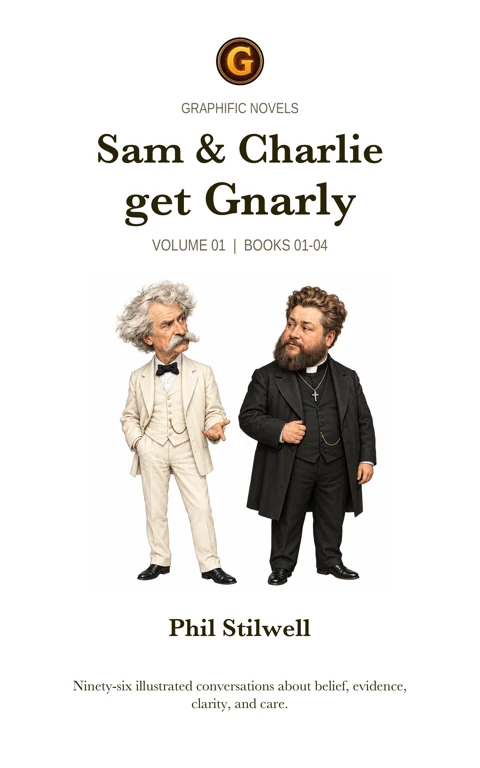
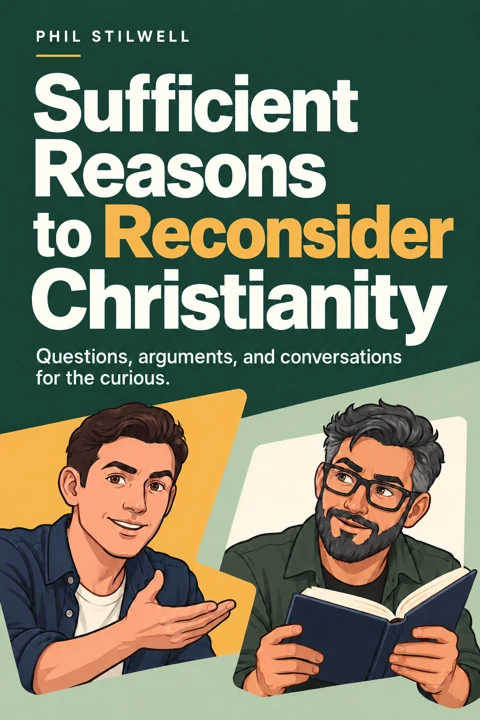
Ninety-six illustrated conversations follow Sam and Charlie through questions about the right to question, divine hiddenness, the clarity of scripture, and practical compassion. Four connected books pair their exchanges with introductions, commentary, and reflection questions, giving readers room to examine the reasoning on both sides.
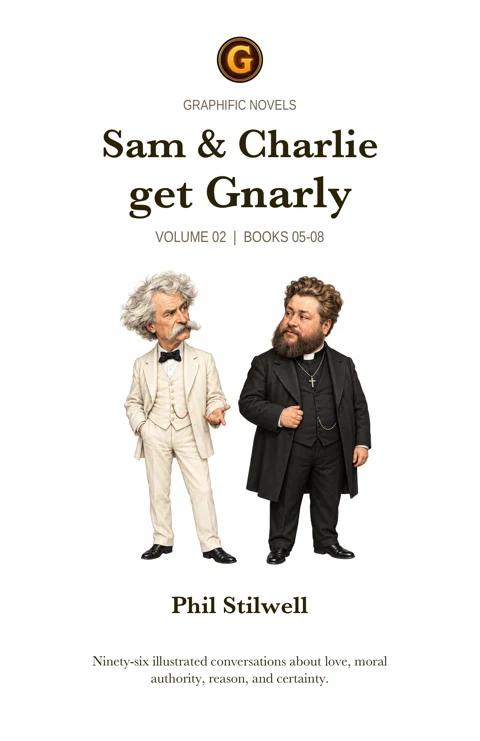
Sam and Charlie return for ninety-six illustrated dialogues about divine love, changing moral commands, belief proportionate to evidence, and the feeling of spiritual certainty. Books 05–08 examine how familiar religious assurances connect to reasons and experience, with commentary that invites readers to test both speakers’ arguments.
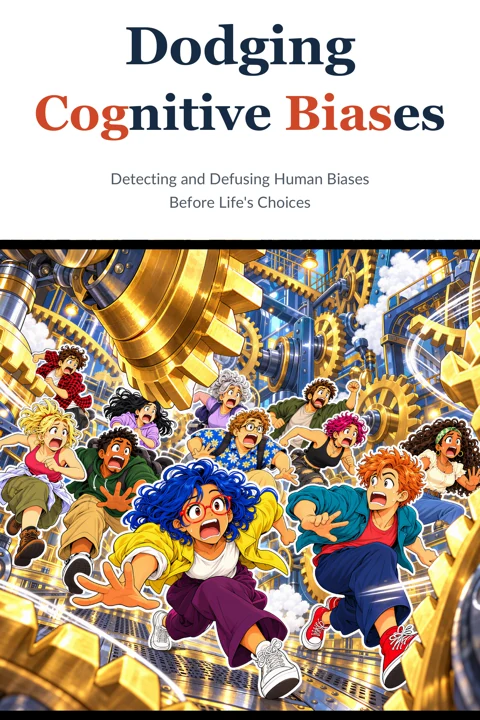
Explore 240 illustrated entries about judgment, memory, attention, and social understanding through familiar situations in hobbies, romance, and work. Comics, three stories per entry, and reflective questions make recurring patterns easier to recognize. Careful qualifications keep the focus on checking evidence and improving your own decisions rather than attaching labels to other people.
This illustrated guide explores 135 reasoning traps through comics and three everyday stories per entry, spanning hobbies, romance, and work. It explains how arguments can mislead through emotion, selective evidence, confused causes, shifting language, or faulty structure. Reflective questions and careful qualifications help turn recognition into clearer explanations and more defensible choices.
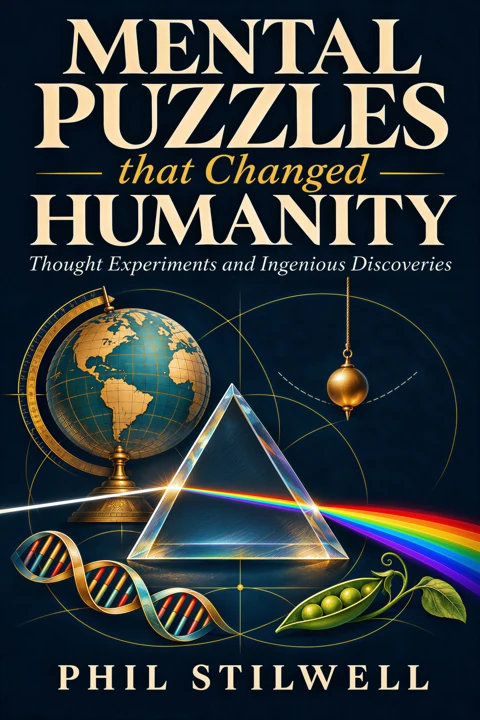
Explore 120 experiments, thought experiments, proofs, and ingenious designs through the problems that made them necessary. Illustrated challenges invite a small act of reasoning before revealing the larger idea. From measuring Earth with shadows to investigating memory and the limits of computation, this collection connects discovery with thinking you can practice yourself.
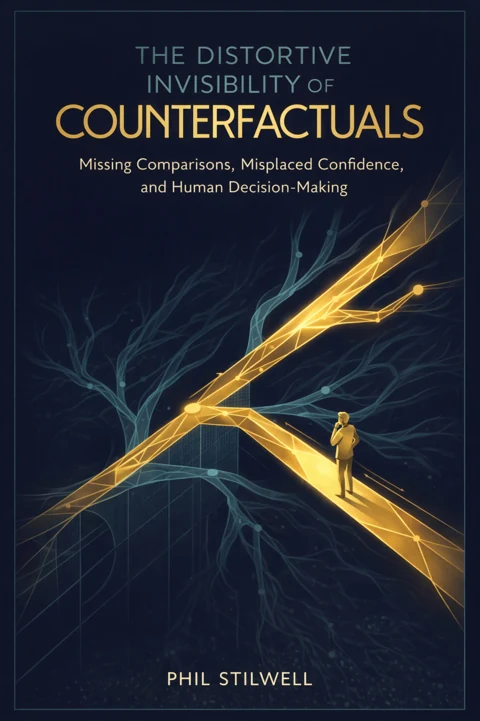
Why does a successful outcome so easily become proof that we chose well? This book examines the missing alternatives behind confident judgments: harm prevented, opportunities forgone, and evidence never gathered. Through everyday examples and a practical comparison method, it explores how to assess decisions when the world shows us only what actually happened.
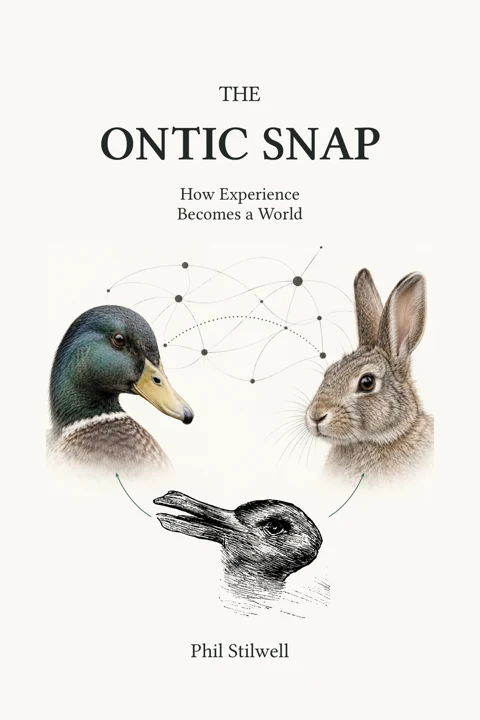
A shape becomes a person, a sound becomes an arrival, and a brief reply becomes a story about someone’s intentions. The Ontic Snap examines how learning and expectation give interpretations their everyday authority. Ten chapters explore recognition, expertise, shared practices, and correction through concrete scenes and a carefully qualified philosophical framework.
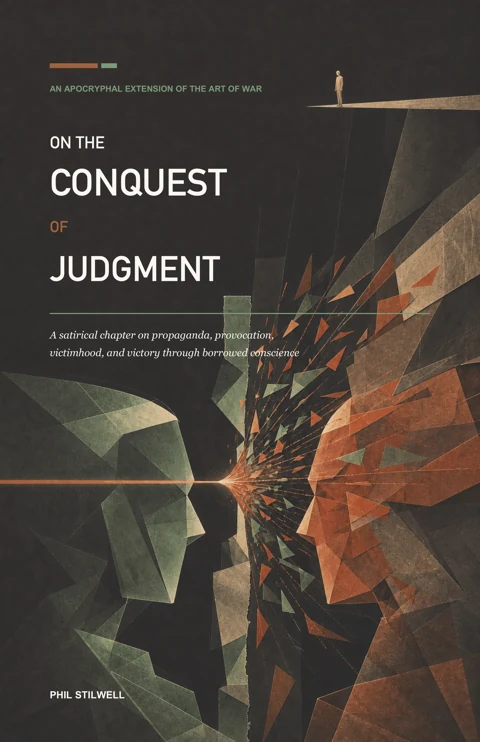
An imagined fourteenth chapter of The Art of War moves from military force to the struggle over public judgment. Thirteen illustrated movements expose propaganda, provocation, selective storytelling, and the recruitment of sincere outsiders. A research-based afterword connects the satire to the ways emotion, identity, and repetition can influence belief.
Fifty-two accessible chapters examine Christian claims through everyday analogies, careful distinctions, and imagined conversations between a defender and a questioner. Scripture, prayer, salvation, punishment, morality, and the resurrection receive sustained attention, alongside a personal question: what becomes possible when confidence is allowed to change with the evidence?
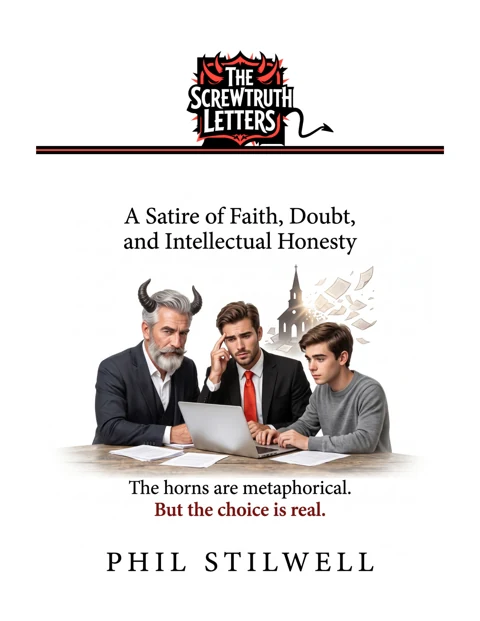
A pastor’s uneasy correspondence with a professional skeptic turns the struggle between conviction and intellectual honesty into illustrated dark comedy. As a teenager’s questions become harder to dismiss, doctrine collides with marriage, livelihood, and belonging—and the strain begins to show in a startlingly physical way.
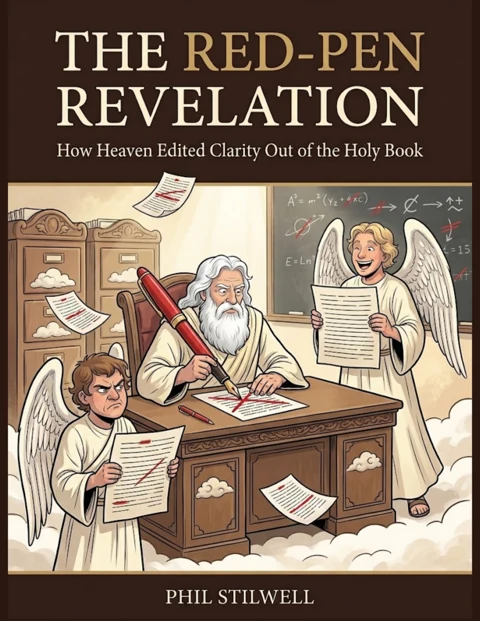
Clarus and Contrarius submit rival holy books whose meanings are unmistakable. Professor Jehovah’s red pen turns that clarity into enduring disagreement. Illustrated heavenly conferences, actual Bible passages, and a practical clarity test examine what happens when claims of perfect guidance meet conflicting doctrines and the people who must live with them.
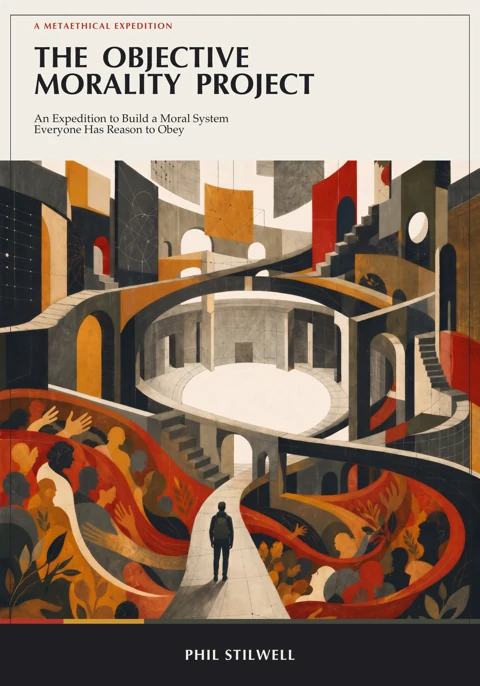
A fictional commission attempts to build a moral system everyone has reason to obey. Through dialogue, practical cases, and competing proposals, Phil Stilwell examines welfare, agency, basic reasons, and moral anti-realism. The investigation separates what matters to people from the further claim that morality binds them independently of their concerns.
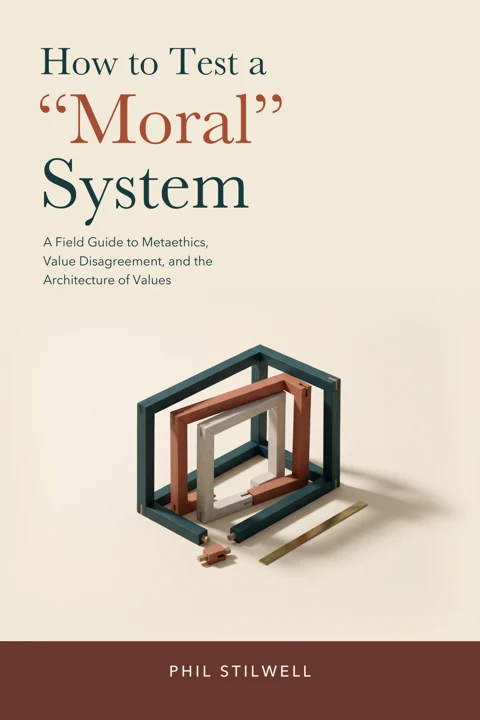
A practical guide to examining moral systems through thirteen tests: whose interests count, what matters, how rules follow, and how disagreements can be corrected. Phil Stilwell compares major ethical traditions with his own alternative, asking how compassion, criticism, and cooperation can function without moral authority independent of anyone’s values.
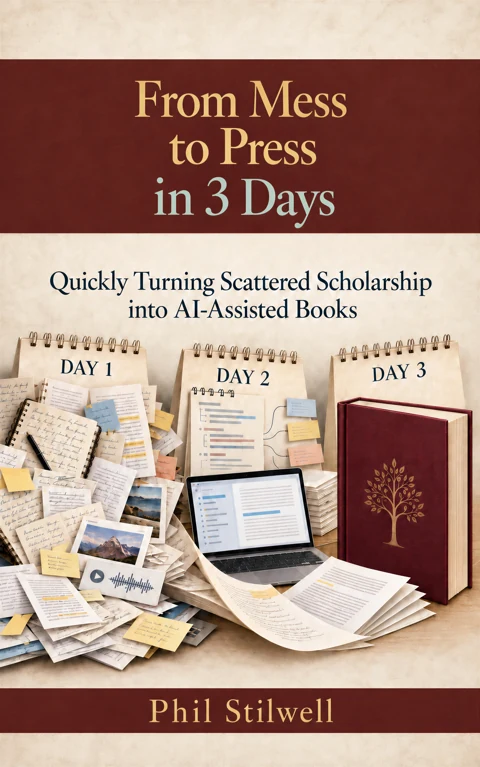
A structured guide to turning lectures, research notes, slides, and unfinished papers into a short book with a capable AI assistant. Phil Stilwell organizes the work around three intensive working days, combining source preparation, a pilot chapter, drafting, evidence checks, and publication preparation while keeping the author responsible for meaning and accuracy.
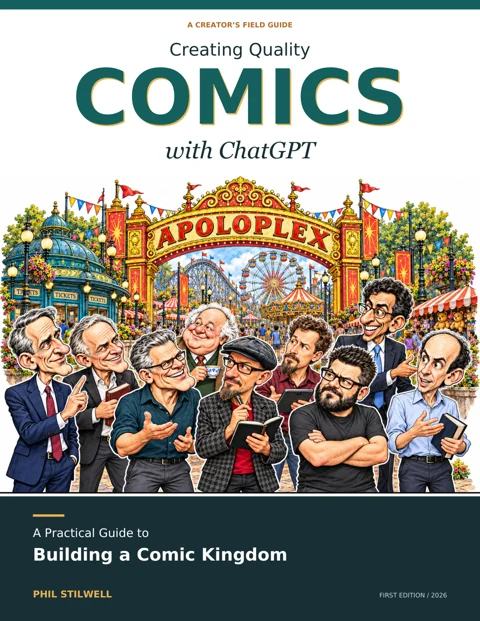
A practical guide to directing comics with ChatGPT, from a first exchange of dialogue to recurring characters and a public website. Using the development of Apoloplex, Phil Stilwell shows how to compare styles, inspect actual images, repair visual mistakes, preserve creative decisions, and ask for better methods as the project grows.
Try a broader topic such as faith, evidence, comics, or values.
THE THREAD THROUGH THE SHELVES
Good questions travel across genres.
A skeptical conversation, an ingenious thought experiment, a difficult moral question, a book waiting to be written: each offers a different way to examine an idea.
Graphific brings Phil Stilwell’s published books together in one place. Explore the collections, open a book’s page for a closer look, and choose the edition that suits you.