A closer look
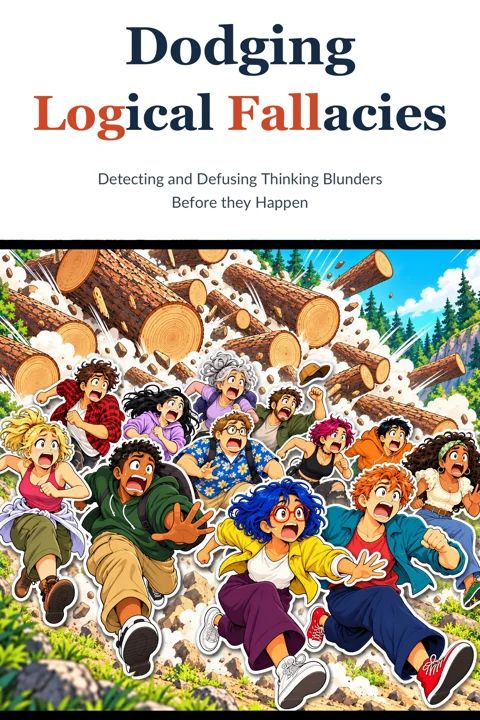
A confident recommendation, an appealing explanation, or a vivid example can make a conclusion feel settled before its reasons have been examined. This book slows that movement down. It asks what the claim is, what support has been offered, and whether that support can carry the weight placed on it. The mistakes become visible through situations close to ordinary life.
Inside are 135 reasoning traps, each explored through an illustration and three fictional anecdotes in hobbies and interests, romance, and career. Some entries use familiar fallacy names; others use descriptive labels for recurring problems. The purpose is to recognize and explain a weak connection, with enough context to suggest how the reasoning could become stronger.
Different ways an argument can go wrong
Eleven browsing categories organize the collection, from emotional appeals and distracting tactics to evidence, mathematics, causes, language, and formal argument structure. The range includes misrepresenting someone’s position, selecting favorable evidence, confusing association with cause, overlooking alternatives, and letting a word change meaning during an argument.
The categories make a large collection easier to explore without pretending that every mistake fits one tidy box. A single argument can contain several weaknesses. An alphabetical index helps you locate a particular entry, while the everyday stories show how a familiar mistake can reappear in a different setting.
Check the argument without losing the nuance
Identifying a bad reason does not prove that its conclusion is false. The conclusion needs its own examination. Likewise, expert advice may be relevant, emotions may reveal what matters to someone, and missing evidence may count against a claim when a reliable search should have found it.
The accompanying qualifications focus attention on what a reason is being asked to establish. A clue may justify further inquiry without settling a question. An exception may defeat a claim about every case while leaving a claim about most cases open. These distinctions help keep criticism proportionate to the actual argument.
Build a more useful response
Closing questions invite application to your own beliefs and decisions. A compact toolkit explains premises and conclusions, evidence and proof, possibility and probability, and the difference between a valid argument and one that also begins from true claims. The language supports inspection of the reasoning rather than a competition to remember terminology.
Readers can browse a relevant problem or work through a category. The practical aim is to point to the missing connection, explain its importance, and identify evidence or qualification that would help. Applying the same standard to your own reasoning makes the book useful for private decisions as well as conversations with people who disagree.
Ready to turn the page?
Find this book on Amazon