A closer look
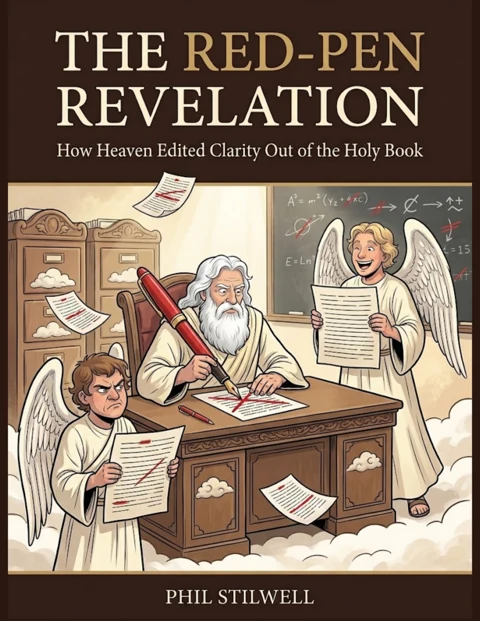
The Red Pen Revelation begins with a simple satirical reversal. Two angels can disagree about which doctrine to teach while still stating each position clearly. Their professor objects to the clarity itself. In the heavenly editing office, straightforward answers must acquire enough ambiguity for opposing communities to defend incompatible conclusions from the same sacred text.
That premise opens a wider question about responsibility in communication. If a teacher controls both the instructions and the consequences of getting them wrong, how much confusion should the teacher leave unresolved? Phil Stilwell follows that question through thirty-five chapters, combining illustrated office comedy with doctrinal case files and attention to the human costs of disagreement.
From abstract doctrine to practical consequences
Baptism, salvation, communion, free will, marriage, hell, war, and religious authority all pass through the office. Further files concern women’s leadership, spiritual gifts, creation, holy days, and the treatment of images, saints, and the dead. These disagreements matter because different answers guide different actions: whom a congregation includes, which relationships it accepts, and what its members believe they must do.
The later sections examine explanations offered for ambiguity, rival revelations, the selection and translation of scripture, and appeals to religious experience. The story repeatedly asks how an honest reader could recognize and correct a mistaken interpretation.
How the evidence is presented
Doctrine chapters pair the angels’ clear fictional submissions with actual biblical passages used by competing readings. A reader’s guide distinguishes an apparent direct clash from disputes about definitions, context, exceptions, or who has authority to decide. This matters: placing verses side by side does not establish that every pair is logically contradictory.
The fictional editing conferences make the disputed choices visible. Source notes identify representative doctrinal standards, while scripture and topical indexes support closer comparison. The illustrated Greek submissions belong to the satire; they are not presented as ancient evidence.
A focused challenge to claims of clarity
The afterword and Clarity Test explain the limits of the argument. Lasting disagreement does not by itself establish that no God exists or that every interpretation is equally plausible. The challenge concerns the stronger claim that perfect divine guidance has supplied reliable answers on consequential matters, despite persistent confusion among informed and sincere readers.
Questioning believers, skeptics, and readers interested in religious satire can examine that challenge without treating ordinary believers as the joke. The book directs its sharpest humor toward the authority explaining the confusion. Families, excluded worshippers, and uncertain seekers supply the reasons the argument matters beyond the editing room.
Ready to turn the page?
Find this book on Amazon