A closer look
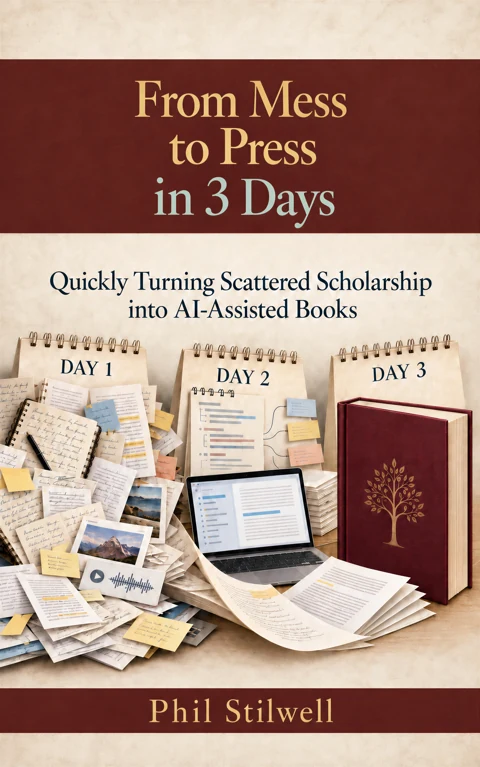
An academic’s accumulated work often contains a book without yet having a book’s shape. The useful distinctions, examples, and objections may be scattered across courses, abandoned drafts, and notes written for different purposes. This guide begins with that existing intellectual labor. It asks the author to choose a manageable question, identify a reader, and give an assistant enough reliable material to help turn the collection into a coherent argument.
The three-day schedule is a framework for a focused project, not a promise that any manuscript can be made publication-ready on demand. It assumes mature, accessible scholarship, a capable model tested on the material, and sustained human attention. The assistant supplies structure and production help; the author supplies knowledge, decides what the work means, checks the evidence, and reads the finished manuscript. Unfinished essential checks are reasons to extend the schedule.
Turn an archive into an argument
The opening stages cover choosing a suitable workspace, making mixed source materials accessible, mapping the archive, and preserving the locations of supporting evidence. A book brief defines the intended reader, central question, and important distinctions. A pilot chapter tests the proposed structure before it is applied across the manuscript. The running example follows fictional academic Mara Ellis as she narrows a broad archive into a book about learning from outcomes without confusing a fortunate result with a successful intervention.
Draft with assistance and verify with judgment
The middle stages recover missing explanations, develop chapters, examine how they fit together, and challenge the reasoning. The guide encourages additional AI reviews while keeping the author responsible for understanding and accepting revisions. Later checks return to actual sources, unresolved claims, voice, and the complete reading experience. Knowledgeable friends or colleagues can review parts in parallel when available, with their time counted as additional effort. A worked example shows how notes become prose and how the author corrects the assistant’s interpretation.
Prepare a submission that accurately represents the book
The final stages address illustrations, covers, readable formatting, inspection of the files, Kindle previews, and publication information. The intended endpoint is a checked manuscript with the files and details needed for submission; Amazon’s review and the date of sale remain outside the production timetable. Reusable instructions and record templates help preserve sources, decisions, and the current state of the work. Troubleshooting sections address generic prose, excessive length, unreliable references, lost decisions, file access, and interruptions that can otherwise consume the working day.
Ready to turn the page?
Find this book on Amazon