A closer look
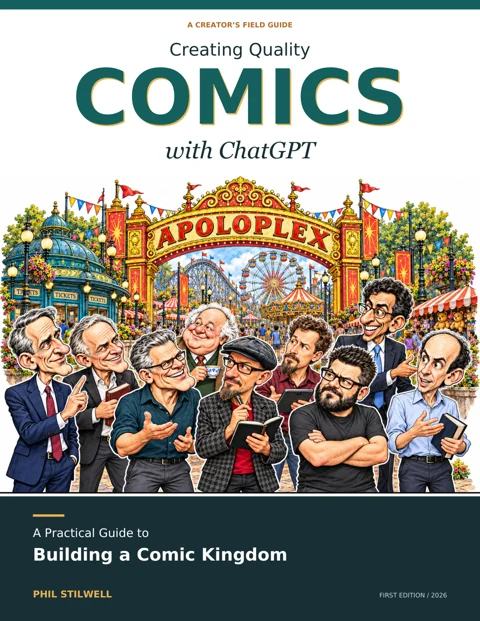
You can begin with a joke, an observation, or an argument you would like to put into conversation. The first task is to make one small scene whose meaning is clear, whose characters are recognizable, and whose words can be read. This guide treats that achievable beginning as the foundation for a continuing comic, with more elaborate publishing and organizational work introduced when it becomes useful.
Apoloplex, a satirical comic set in a fictional theme park, provides the production examples. Readers see experiments and revisions alongside the reasoning behind them: why a likeness failed, how a speech balloon became misleading, or where an image needed a more coherent instruction. The dialogue is invented satire, not a record of actual statements. The broader lesson is how to direct an assistant while retaining responsibility for the idea, its meaning, and the finished result.
Give characters a consistent but expressive identity
The guide compares visual treatments and explains how style, reference images, facial structure, and recognizable features work together. Consistency does not mean freezing a character into one expression or pose. Gestures, staging, props, and surroundings need room to carry the scene. Chapters on scripting ask the creator to settle the reasoning and dialogue before drawing, then let visible action contribute to the point. A complete, coherent instruction can be more useful than an accumulating trail of corrections that no longer describe a clear scene.
Ask for criticism that can be checked
Review focuses on the actual image: who is speaking, where each balloon points, whether lettering is readable, and whether bodies and objects make sense. ChatGPT’s assurance that something is correct is not treated as evidence. The method also distinguishes checking agreed requirements from recommending an improvement or reconsidering the direction of the project. Regular questions about avoidable work and preventable errors form what the book calls “wringing.” The creator evaluates those suggestions, compares revisions, and preserves the chosen version.
Build a working studio around the scenes
Later chapters follow the complete sequence through export, publication, and archiving. They explain a first website, domains, GitHub and Cloudflare publishing options, image preparation, and the records that help a growing collection remain manageable. Guidance on chats, project handovers, storage, costs, and cleanup connects creative work to everyday maintenance. A reusable prompt library and actual production documents show how an assistant can prepare detailed instructions under human direction, giving writers, satirists, and aspiring comic creators a practical starting structure.
Ready to turn the page?
Find this book on Amazon